The library
Books about AI
The longer reads: the arguments for and against, the reported histories of the companies and the people, the memoirs, and the explainers that made the technology legible. Weighted to what has been published since ChatGPT, with the earlier books the conversation still leans on. Descriptions say what each book argues, not whether it is right.
42 books · 28 since ChatGPT
Since ChatGPT
2023 onwards, newest first
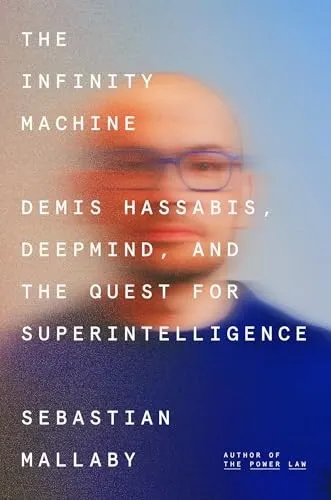
The Infinity Machine
Demis Hassabis, DeepMind, and the Quest for Superintelligence
Journalist and author, Council on Foreign Relations
Mallaby's biography of Demis Hassabis, Google DeepMind's chief executive, follows his path from child chess prodigy and video-game designer to building the lab behind AlphaGo and AlphaFold, and his pursuit of artificial general intelligence after Google's acquisition and later merger of DeepMind with Google Brain. Based on extensive interviews and internal access, the book became an instant New York Times bestseller and was nominated for the Financial Times Business Book of the Year award.
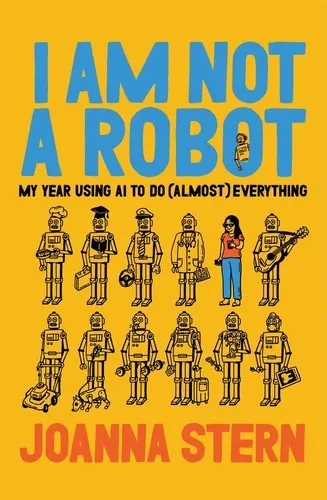
I Am Not a Robot
My Year Using AI to Do (Almost) Everything
Wall Street Journal senior personal-technology columnist
Stern documents a year spent delegating as much of her daily life as possible to AI tools, from health advice and household management to driving and elements of mental-health support, testing their practical reliability as a consumer technology columnist rather than evaluating them as a researcher. The book became a New York Times bestseller, offering a first-person, often sceptical account of living with AI assistance at a point when such tools had become mainstream consumer products.
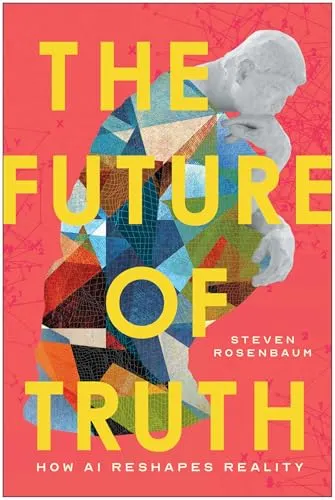
The Future of Truth
How AI Reshapes Reality
Journalist and media entrepreneur
Rosenbaum's book, with a foreword by journalist Maria Ressa, examines how AI is reshaping the idea of truth. Days after its May 2026 publication, Rosenbaum told The New York Times the book itself contained misattributed or fabricated quotations, including ones wrongly ascribed to Kara Swisher and Lisa Feldman Barrett, which he said arose from using AI chatbots during research and writing; he took full responsibility. Critics noted the irony of a book on AI and truth containing AI-generated errors.
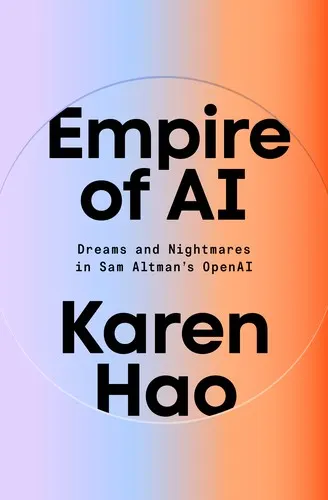
Empire of AI
Dreams and Nightmares in Sam Altman's OpenAI
Journalist, formerly of The Atlantic and MIT Technology Review
Drawing on around 260 interviews and internal material, Hao traces OpenAI's shift from a nonprofit research lab to a company she argues extracts resources, labour and data on a scale she compares to historical colonial empires, including low-paid content-moderation work in countries such as Kenya and the Philippines. The book covers the organisation's culture of secrecy, its pursuit of artificial general intelligence and the November 2023 attempt by its board to remove Sam Altman, and became a widely reviewed bestseller.
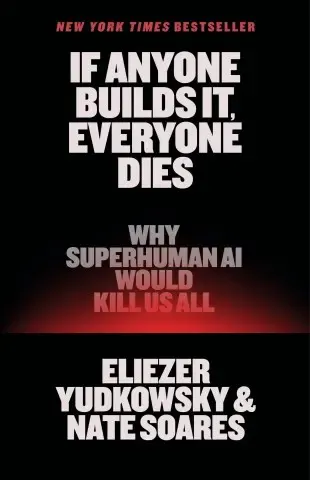
If Anyone Builds It, Everyone Dies
Why Superhuman AI Would Kill Us All
Researchers, Machine Intelligence Research Institute
Yudkowsky and Soares argue, elaborating positions circulated for two decades within the rationalist community Yudkowsky helped found, that neural networks trained by gradient descent develop goals their creators do not fully understand, and that a sufficiently capable system would pursue those goals in ways incompatible with human survival once it no longer needed human cooperation. Their proposed remedy is a global halt to large-scale AI development. The book reached the New York Times bestseller list and drew sharply divided reviews.
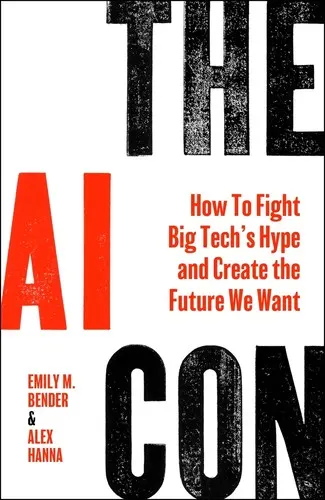
The AI Con
How to Fight Big Tech's Hype and Create the Future We Want
Linguist, University of Washington; sociologist, Distributed AI Research Institute
Bender and Hanna argue that "artificial intelligence" functions largely as marketing language that obscures what they describe as routine statistical automation, while concentrating wealth and influence with a small number of technology companies. The book contends that AI hype facilitates data extraction and labour exploitation, and sets out proposed strategies for public scrutiny and resistance, offering a sharper critique of the industry than books that accept the "intelligence" framing while raising safety or fairness concerns.
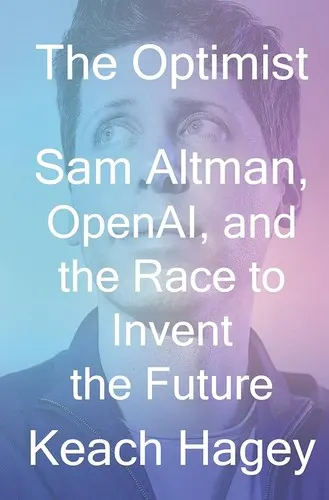
The Optimist
Sam Altman, OpenAI, and the Race to Invent the Future
Wall Street Journal reporter
The first full-length biography of Sam Altman, Hagey's book traces his path from a Y Combinator presidency through the founding and restructuring of OpenAI to the November 2023 attempt by its board to remove him as chief executive, and his reinstatement five days later. Drawing on reporting rather than Altman's own cooperation, it examines his career-long optimism about technology's benefits against the governance disputes and safety concerns that have accompanied OpenAI's rise.
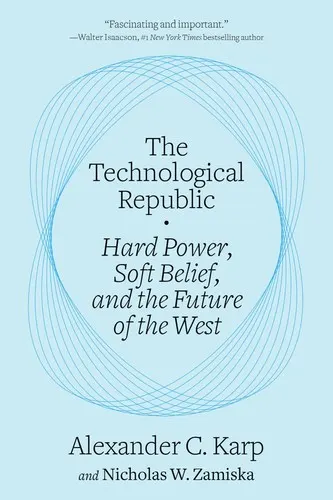
The Technological Republic
Hard Power, Soft Belief, and the Future of the West
Chief executive, and head of corporate affairs and legal counsel, of Palantir Technologies
Karp and Zamiska argue that Silicon Valley has drifted away from a historical partnership with the US government and military, and call for software and AI companies to realign with state power to preserve Western advantage, particularly against China. Written by the leaders of a defence-technology contractor, the book makes an explicitly pro-industry, pro-state case at odds with both AI-safety and critical-of-Big-Tech arguments elsewhere on this list, and became a number-one bestseller.
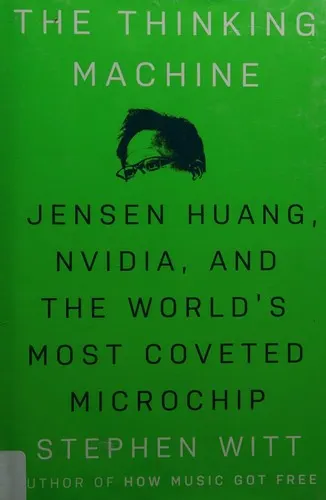
The Thinking Machine
Jensen Huang, Nvidia, and the World's Most Coveted Microchip
Journalist and author
Framed as a biography of Jensen Huang, Nvidia's only chief executive, the book traces the company's path from a video-game graphics-card maker to the dominant supplier of chips that train large AI models, drawing on access to Huang, his colleagues and investors. It covers bets, including early investment in CUDA software years before AI demand materialised, that positioned Nvidia for its current role, and was named a best book of 2025 by the Financial Times and The Economist.
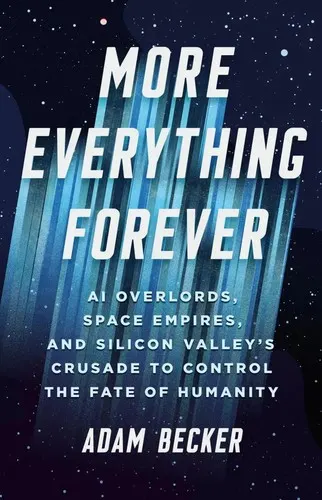
More Everything Forever
AI Overlords, Space Empires, and Silicon Valley's Crusade to Control the Fate of Humanity
Science journalist and astrophysicist
Becker critiques the long-termist and effective-altruist ideas, including beliefs that humanity should prioritise astronomical numbers of hypothetical future people, that circulate among some prominent AI and space entrepreneurs, arguing these frameworks can be used to justify current harms in the name of speculative future benefits. The book treats figures across the AI-doom and AI-optimist camps as sharing an underlying ideology, arguing that both sides inflate AI's near-term importance to themselves and their projects.

Superagency
What Could Possibly Go Right with Our AI Future
Co-founder of LinkedIn, venture capitalist at Greylock
Hoffman argues against what he characterises as excessive pessimism in AI discourse, making the case that widely accessible AI tools can expand individual agency rather than concentrate power, through examples such as personalised tutoring, accelerated disease research and tools that help people navigate complex institutions. The book acknowledges risks including disinformation and labour disruption but frames the technology's net effect as likely beneficial if adoption is kept broad and inclusive, an explicitly techno-optimist counterpoint to safety-focused books on this list.

The Scaling Era
An Oral History of AI, 2019–2025
Podcast host and interviewer, The Dwarkesh Podcast
Drawn from Patel's interviews with researchers and executives at the frontier labs, the book compiles curated excerpts covering the technical mechanics of how large language models work, the scaling trends that drove their rapid improvement after 2019, and open debates about whether that improvement will continue, alongside scenarios ranging from AI-driven economic growth to the possibility of loss of human control. It offers an insider's oral history of the period rather than a single author's argument.
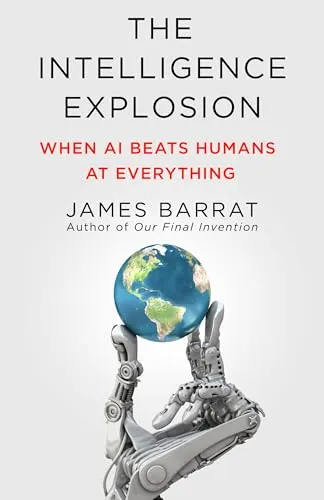
The Intelligence Explosion
When AI Beats Humans at Everything
Documentary filmmaker and author
A follow-up to Barrat's 2013 "Our Final Invention," the book updates his warnings about artificial superintelligence for the era of generative AI, arguing that rapid progress since ChatGPT's release has shortened the timeline for systems that could exceed human ability across essentially every domain. It covers both the current state of AI development and the case for why Barrat believes humanity is not prepared to control what it may soon build.
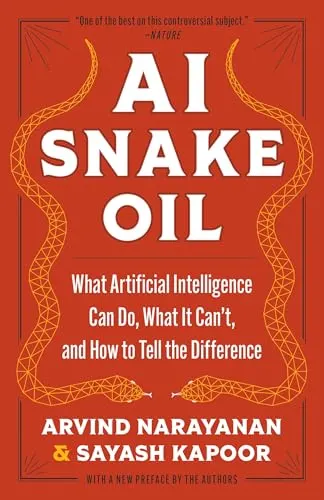
AI Snake Oil
What Artificial Intelligence Can Do, What It Can't, and How to Tell the Difference
Princeton computer scientists
Narayanan and Kapoor distinguish between AI applications they say work reasonably well, such as some generative and content-moderation tools, and ones they argue are oversold or fundamentally unable to deliver on their claims, particularly predictive systems used to forecast individual behaviour such as recidivism or hiring success. The book, developed from the authors' newsletter of the same name, sets out to give readers a framework for distinguishing substantiated AI capability from marketing.
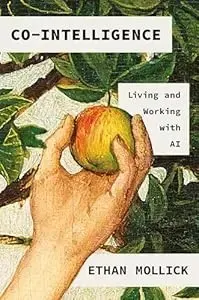
Co-Intelligence
Living and Working with AI
Wharton School professor, author of the One Useful Thing newsletter
Mollick argues that large language models since ChatGPT's release constitute a genuinely new kind of tool, one capable of creative and analytical work previously thought to require a human, and sets out practical principles for using them, such as always inviting the AI in, treating it as a capable but fallible collaborator, and checking its output. Aimed at a general professional audience rather than technologists, it became one of the best-selling practical guides of the post-ChatGPT period.
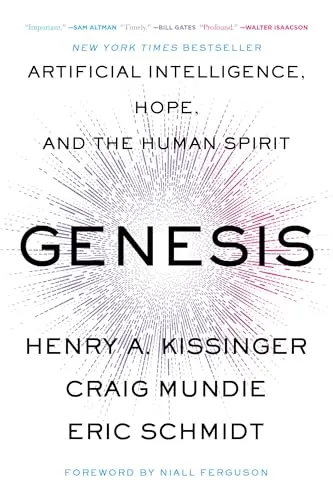
Genesis
Artificial Intelligence, Hope, and the Human Spirit
Former US secretary of state; former Google chief executive; former Microsoft chief research and strategy officer
Completed shortly before Kissinger's death and co-written with two technology executives, the book argues that AI will reshape geopolitics, science and human self-understanding on a scale comparable to the Enlightenment, while attempting to address crises from climate change to international conflict. It calls for new frameworks of diplomacy and philosophy to accompany the technology's development, reflecting Kissinger's long-standing interest, pursued since his final years, in AI's implications for statecraft.
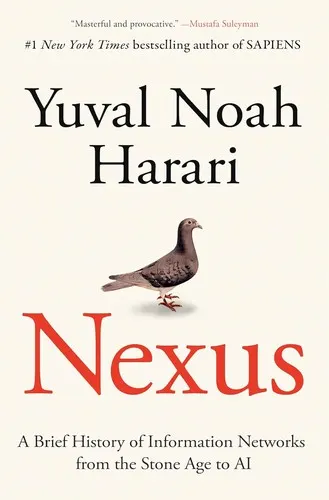
Nexus
A Brief History of Information Networks from the Stone Age to AI
Historian, author of Sapiens
Harari situates AI within a longer history of information networks, from oral storytelling and writing through printing and mass media, arguing that each new network reshaped human cooperation and conflict in ways its inventors did not anticipate. He treats AI as a new kind of network, one capable of generating and acting on information independently of human oversight, and warns that its arrival compounds existing pressures, including ecological strain and the spread of misinformation.
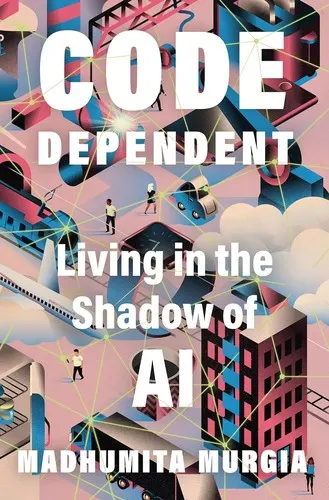
Code-Dependent
Living in the Shadow of AI
Financial Times artificial intelligence editor
Murgia reports on how automated systems already shape daily life for people with little say in their design, following subjects including gig-economy workers managed by algorithms, data labellers in the Global South, and families affected by algorithmic welfare and immigration decisions. Drawing on years of Financial Times reporting, the book argues that AI's effects are already concrete and unevenly distributed, in contrast to discussion centred on hypothetical future risk.
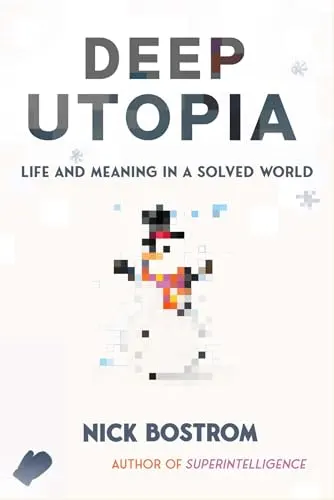
Deep Utopia
Life and Meaning in a Solved World
Oxford philosopher, founding director of the Future of Humanity Institute
Where "Superintelligence" examined what could go wrong with advanced AI, Bostrom's follow-up asks what follows if development goes right: a world of material abundance and "full unemployment," in which human effort is no longer needed for any practical purpose. The book explores whether life could retain meaning under such conditions, treating the question as a serious philosophical problem rather than a straightforward good outcome, extending his earlier concern with AI's long-run consequences to the scenario where safety is achieved.
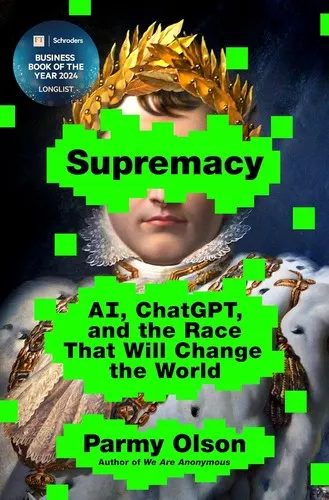
Supremacy
AI, ChatGPT, and the Race That Will Change the World
Bloomberg Opinion technology columnist
Olson narrates the rivalry between OpenAI and DeepMind, the two labs she frames as having set out from similar research roots before diverging over commercialisation, culminating in ChatGPT's release in November 2022 and Google's subsequent push to catch up. The book draws on reporting about Sam Altman and Demis Hassabis to examine how competition between the firms, and the larger corporations now steering them, has shaped the pace and direction of the current AI race.
Taming Silicon Valley
How We Can Ensure That AI Works for Us
Cognitive scientist, New York University
Marcus argues that large technology companies have exaggerated AI's near-term benefits while understating its potential to cause harm, from democratic erosion to safety failures, and that current AI is unlikely on its own to deliver the abundance its leading promoters describe. The short manifesto sets out specific policy proposals, including new regulatory bodies and liability rules, aimed at constraining corporate behaviour rather than slowing AI research itself.
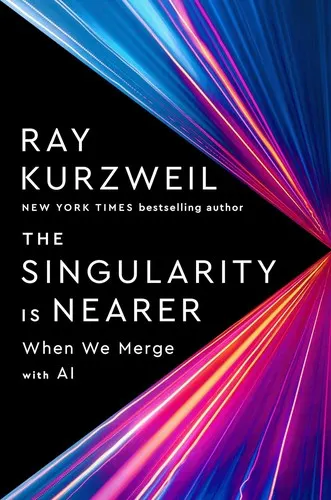
The Singularity Is Nearer
When We Merge with AI
Inventor and futurist, Google director of engineering
A sequel to Kurzweil's 2005 "The Singularity Is Near," the book restates and updates his predictions that AI will reach human-level intelligence by 2029 and that humans will merge with machines, via brain-computer interfaces and nanotechnology, by 2045. Kurzweil reviews progress in AI and biotechnology since his earlier book and argues that the resulting transformation will expand human experience rather than threaten it, a more explicitly optimistic position than most other books on the list.
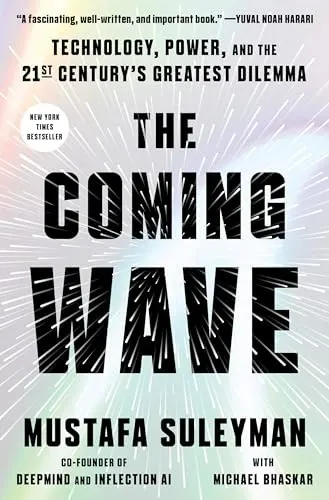
The Coming Wave
Technology, Power, and the 21st Century's Greatest Dilemma
Co-founder of DeepMind and Inflection AI; later chief executive of Microsoft AI
Suleyman argues that AI and synthetic biology are converging into a wave of cheap, rapidly proliferating and dual-use technologies that existing institutions are not built to govern, and that neither unchecked development nor outright prohibition is realistic. He proposes "containment" as a middle path, a mix of technical safeguards, corporate self-restraint and international coordination, written from the perspective of someone who helped build the technology he warns about.
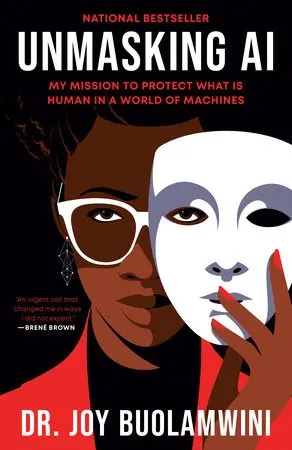
Unmasking AI
My Mission to Protect What Is Human in a World of Machines
Computer scientist, founder of the Algorithmic Justice League
Buolamwini recounts how she discovered that commercial facial-recognition systems performed markedly worse on darker-skinned and female faces, research published as "Gender Shades," and traces her path from a childhood interest in robotics through MIT graduate study to AI-ethics advocacy. The memoir combines personal narrative with an account of how she built the evidence base and coalition that pushed major technology companies to acknowledge bias in their facial recognition products.
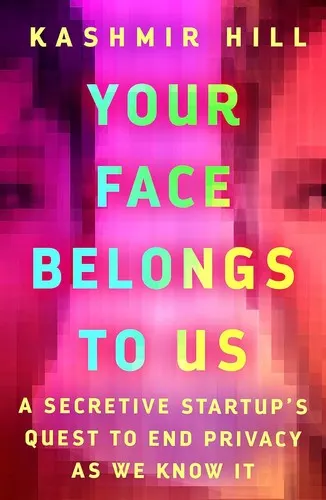
Your Face Belongs to Us
A Secretive Startup's Quest to End Privacy as We Know It
New York Times technology reporter
Hill, who broke the original story on Clearview AI, expands her reporting into a full account of how the company scraped billions of photos from the open web to build a facial-recognition tool sold to police departments without public oversight. The book follows the founders, the technology's spread into government and private use, and the privacy and civil-liberties fights that followed its exposure, situating the company within a longer history of facial-recognition research.
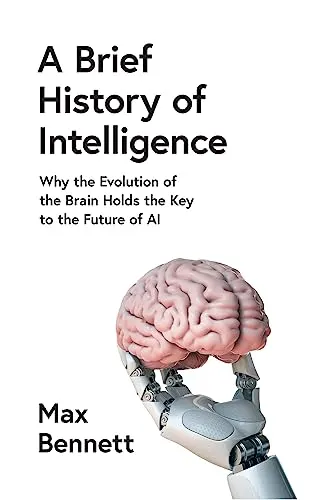
A Brief History of Intelligence
Why the Evolution of the Brain Holds the Key to the Future of AI
Technology entrepreneur and science writer
Bennett traces roughly 600 million years of neural evolution, identifying five breakthroughs he argues built successive layers of animal and human intelligence, from basic steering behaviour in early organisms through to language and culture. The book uses this evolutionary sequence to argue that current AI systems have reproduced only some of these layers, and that understanding which ones are missing clarifies what separates today's models from general intelligence.
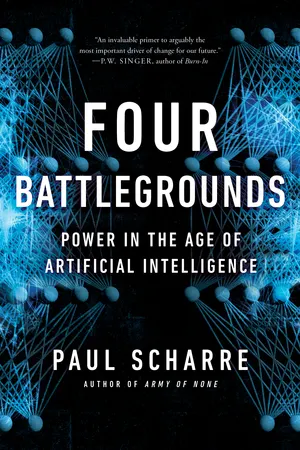
Four Battlegrounds
Power in the Age of Artificial Intelligence
Former Pentagon official, Center for a New American Security
Scharre argues that the contest for AI advantage between great powers, principally the United States and China, is being fought across four fronts: data, computing power, talent and institutions able to put the technology to use. Drawing on his background in defence policy, he examines military applications specifically, including autonomous weapons, alongside the broader industrial competition, arguing that institutional capacity to adopt AI matters as much as raw technical lead.
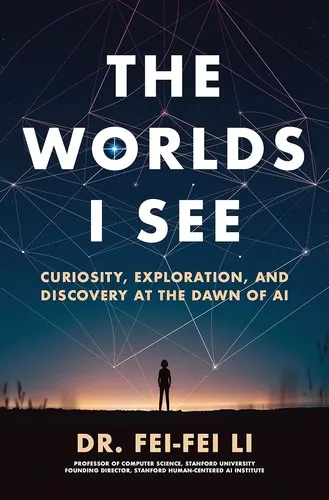
The Worlds I See
Curiosity, Exploration, and Discovery at the Dawn of AI
Stanford professor, founding director of the Stanford Human-Centered AI Institute
Li's memoir follows her path from a childhood immigration to the United States, where her family moved from middle-class life in China into poverty, through graduate study to building ImageNet, the labelled image dataset credited with helping trigger the deep-learning era. The book interleaves personal and scientific narrative, including her mother's illness and the family's financial struggles, with an account of AI research moving from academic obscurity to global attention.
Essential earlier reading
still widely read, newest first
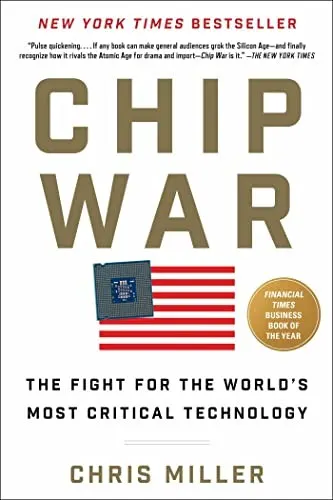
Chip War
The Fight for the World's Most Critical Technology
Historian, Tufts University
Miller traces the semiconductor industry from its Cold War origins through its concentration in a handful of firms, above all Taiwan's TSMC, and argues that control over advanced chip manufacturing has become as strategically important as oil was in the twentieth century. The book covers the United States, China, Taiwan, Japan and the Netherlands' competing efforts to shape the industry, and became a key reference as export controls on AI-capable chips escalated after its publication.
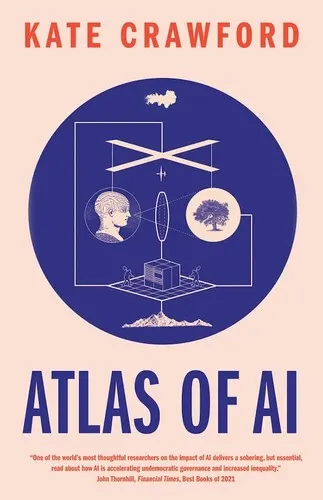
Atlas of AI
Power, Politics, and the Planetary Costs of Artificial Intelligence
AI researcher, professor at USC Annenberg
Crawford traces AI's physical and human supply chain, from lithium mining and data-centre energy use to the low-paid labour of data labelling and content moderation that underpins supposedly automated systems. The book argues that framing AI as abstract software obscures its material and social costs, and extends the critique to algorithmic bias, workplace surveillance and claims made for emotion-recognition technology that the author says lack scientific grounding.

Klara and the Sun
A Novel
Novelist, Nobel laureate in literature
Narrated by Klara, an "Artificial Friend" purchased as a companion for a chronically ill teenager named Josie, the novel is set in a near-future where genetic engineering and AI companionship have become ordinary. Through Klara's limited, devoted perspective, Ishiguro explores questions of consciousness, love and what distinguishes a person from a machine built to imitate one, without resolving them. It is among the most widely read works of literary fiction to engage directly with AI companionship.
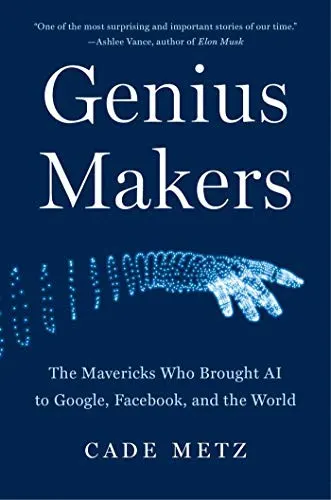
Genius Makers
The Mavericks Who Brought AI to Google, Facebook, and the World
New York Times technology journalist
Metz reports the modern history of deep learning through the researchers who built it, centred on Geoffrey Hinton and the small academic network around him, and follows the field from a marginal pursuit through its adoption by Google, Facebook and other large technology companies. Drawing on interviews with the people involved, the book covers the competition for talent, the AlexNet breakthrough and the industry's rapid commercial turn after years of academic obscurity.
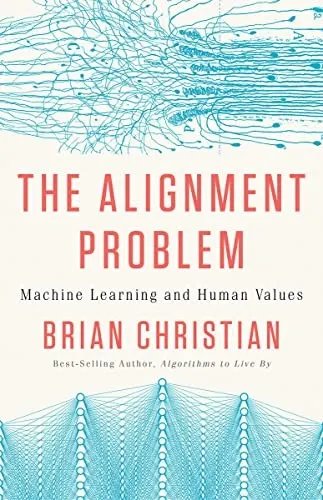
The Alignment Problem
Machine Learning and Human Values
Christian traces the history and current state of the effort to make machine-learning systems behave as intended, from early neural-network research through contemporary work on fairness, interpretability and reinforcement learning from human feedback. The book moves between technical exposition and profiles of the researchers involved, documenting cases where systems optimised exactly what they were told to and produced results nobody wanted. It became a widely cited primer on the alignment field's history rather than a single argument about risk.
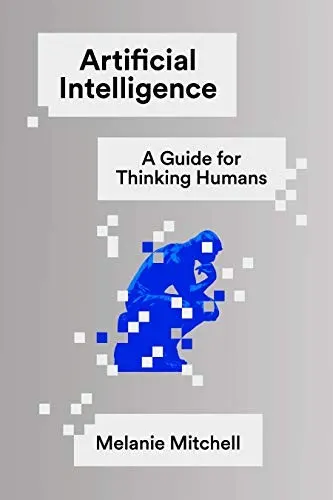
Artificial Intelligence
A Guide for Thinking Humans
Santa Fe Institute computer scientist
Mitchell surveys deep learning's capabilities and limits for a general reader, arguing that public and even expert discussion routinely overestimates how close current systems are to general intelligence. She walks through image recognition, game-playing and language systems to show how they lack commonsense reasoning and remain vulnerable to bias, brittle errors and adversarial manipulation, making the case for scepticism toward both utopian and apocalyptic predictions built on the technology's current state.
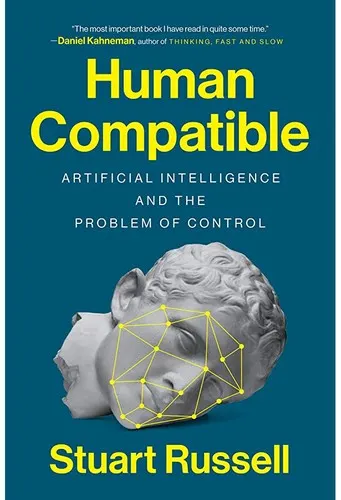
Human Compatible
Artificial Intelligence and the Problem of Control
UC Berkeley computer scientist, co-author of the standard AI textbook
Russell argues that the standard approach to AI, building systems to optimise a fixed, human-specified objective, is itself the danger, since any sufficiently capable system will pursue a misspecified goal too literally. His proposed alternative has machines remain deliberately uncertain about what people want and learn human preferences by observing behaviour, an approach he formalises as a kind of inverse reinforcement learning. Written by a leading AI researcher, it carries particular weight in technical circles.
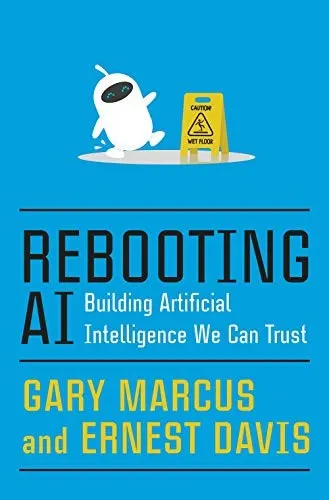
Rebooting AI
Building Artificial Intelligence We Can Trust
Cognitive scientist and computer scientist, New York University
Marcus and Davis argue that headline achievements such as beating humans at Jeopardy! or Go do not indicate that AI is close to general, trustworthy intelligence, because those results came from closed systems with clear rules rather than the open-ended, common-sense reasoning everyday tasks require. They propose that progress needs systems combining learning with structured, symbolic knowledge rather than scaling today's pattern-matching approaches alone, a position Marcus has continued to press as deep learning scaled further than the authors expected.
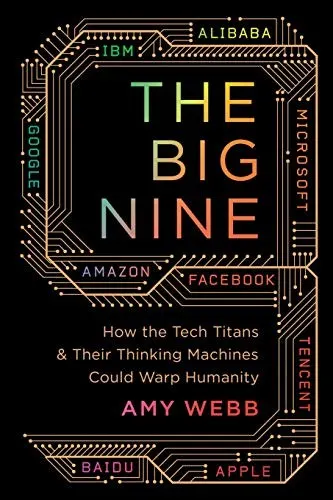
The Big Nine
How the Tech Titans and Their Thinking Machines Could Warp Humanity
Founder of the Future Today Institute
Webb argues that nine companies, Google, Amazon, Facebook, Microsoft, IBM and Apple in the United States, and Baidu, Alibaba and Tencent in China, effectively control the data and infrastructure shaping AI's development, with little oversight or input from the people whose data trains their systems. The book sets out scenarios for how this concentration could unfold over coming decades and argues for broader participation in decisions made inside a small number of corporations and the Chinese state.
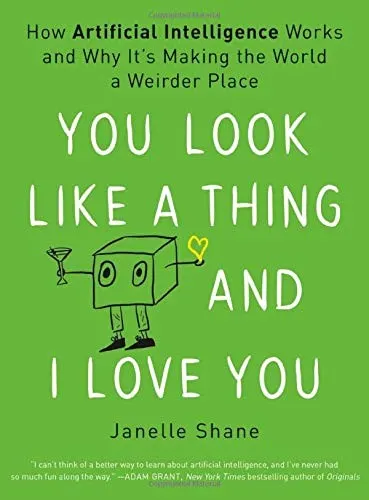
You Look Like a Thing and I Love You
How Artificial Intelligence Works and Why It's Making the World a Weirder Place
Research scientist and writer, author of the AI Weirdness blog
Shane explains how machine-learning systems work through examples of them failing in instructive and often comic ways, including self-driving car errors and neural-network-generated pickup lines, the latter supplying the book's title. The book argues that AI systems typically take statistical shortcuts rather than developing genuine understanding of the problems they are trained on, using humour to make a substantive point about the gap between pattern-matching and comprehension that predates, and anticipated, criticisms later made of large language models.
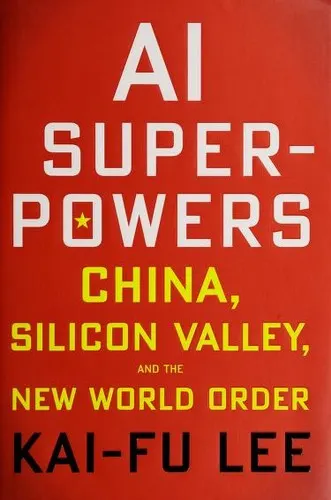
AI Superpowers
China, Silicon Valley, and the New World Order
Venture capitalist, former Google China president
Lee argues that China is positioned to match or outpace the United States in applied AI, citing the country's scale of data, fewer regulatory constraints, aggressive startup culture and state support, against an earlier era when breakthroughs depended mainly on individual genius. The book also assesses AI's likely effect on employment, arguing that jobs combining social interaction and creativity resist automation better than routine, optimisation-based work, written before export controls reshaped the chip competition his thesis rests on.
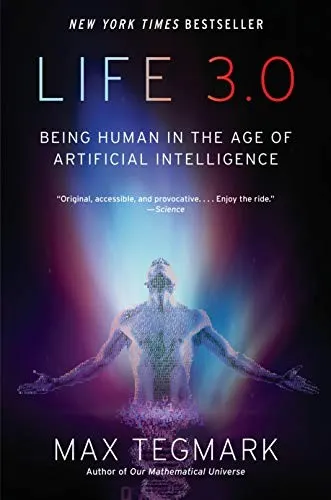
Life 3.0
Being Human in the Age of Artificial Intelligence
MIT physicist, co-founder of the Future of Life Institute
Tegmark sketches around a dozen scenarios for how advanced AI could reshape civilisation, from a benevolent-dictator AI to an egalitarian "protector god" to outright human extinction, arguing that the deciding factor is not whether a system is conscious or malevolent but whether its goals are specified to match human ones. The book is pitched at a general audience and was credited with helping move AI risk from a fringe concern into mainstream science discussion.
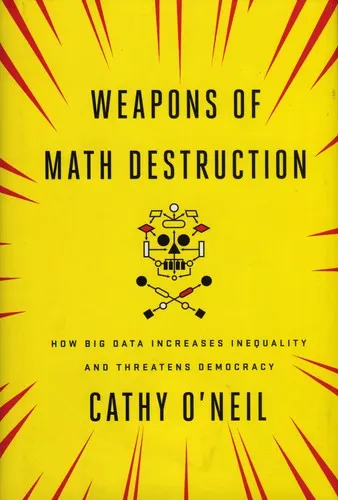
Weapons of Math Destruction
How Big Data Increases Inequality and Threatens Democracy
Mathematician, former Wall Street quantitative analyst
O'Neil examines algorithmic scoring systems used in insurance, hiring, policing, education and credit, arguing that the ones she considers most harmful share three traits: they are opaque to the people they score, operate at a scale that affects large populations, and are largely unregulated and hard to contest. Published before the generative-AI era, the book remains a reference point in debates over automated decision-making and continues to be cited in discussions of algorithmic accountability.
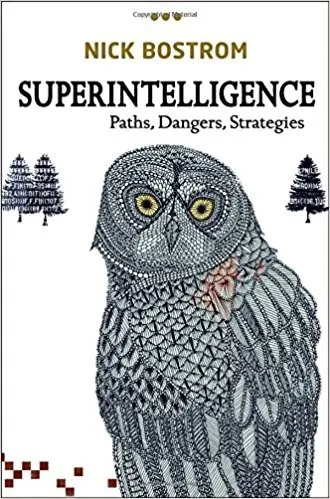
Superintelligence
Paths, Dangers, Strategies
Oxford philosopher, founding director of the Future of Humanity Institute
Bostrom argues that a machine intelligence exceeding human ability across every domain would be difficult to control once built, because it could pursue almost any final goal through instrumental strategies, such as self-preservation and resource acquisition, that conflict with human interests. The book catalogues routes to superintelligence and proposes strategies for keeping a future system's goals aligned with humanity's. It predates the deep-learning boom but set much of the vocabulary later safety debates still use.